Environmental matters
A new carbon capture and storage project planned for Moomba will protect our planet for millions of years to come
As an engineering student, Christian Winterfield helped build a biodiesel-powered motorbike that raced through the Outback, beating competitors from around the world. Now, after a decade working in the oil and gas industry in engineering roles, Winterfield has returned to his green roots, using his skills to implement cutting-edge technology and environmental solutions for the resources sector.
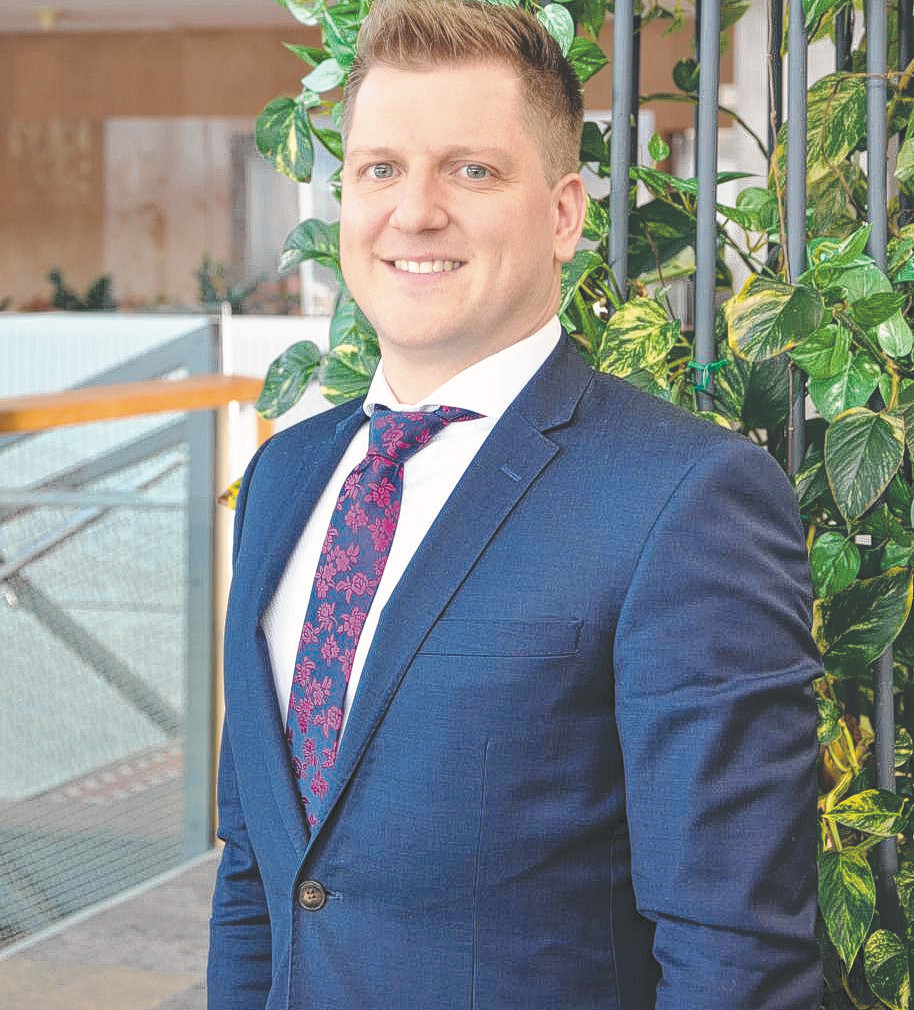 Winterfield is now team leader, carbon capture and storage subsurface and field development for Santos, working on hi-tech solutions to reduce the company’s environmental impact and help it become more efficient.
“Back in 2017, the company kicked off a team called Energy Solutions, which was focused around identifying opportunities to reduce our emissions intensity,” he says. The team looks at new applications for existing technology as well as new innovations, with the goal of delivering emissions reduction and a more sustainable business.
“It is absolutely the most exciting part of my career to date,” Winterfield says. “It’s really highly motivating to be involved at the cutting edge and involved in developing technologies and opportunities that maintain the longevity of the sustainability of the oil and gas industry.”
Two years ago he was part of a pilot project at Limestone Creek in the Cooper Basin in northern SA, converting the Hobbes-1 oil well pump to solar power. It was Australia’s first fully off-grid oil well and was such a success, Santos converted a further 22 wells last year, and is converting another 34 wells this year. There are more than 200 existing pumps across the Cooper that could be converted to solar over time. Conversion reduces oil consumption, long-distance fuel haulage and associated emissions.
“We’ve installed 2MW of solar power to power our Port Bonython liquids plant, which is reducing that facility’s electricity demand by about 6 per cent from the grid,” Winterfield says. “We’re looking into where we can integrate renewables into all of our operations and drive emissions reduction.”
But it’s the potential of a carbon capture and storage (CCS) project planned for Moomba, now his primary focus, that really excites Winterfield. CO2 (carbon dioxide) that would otherwise be released into the atmosphere is instead injected and stored deep underground in depleted oil and gas fields that safely held oil and gas for millions of years.
“It’s one of those things that’s been identified by the International Energy Agency and other scientific organisations as something that is required, and a critical source of abatement for limiting our global temperatures, and so it’s really exciting to be a part of that,” he says.
A cleaner-energy future
As air pollution reaches toxic levels in Asia, Santos’ LNG team in Adelaide is providing a solution for a cleaner, greener future
Having spent the past 13 years working and travelling internationally, Fiona Hall has experienced greenhouse-gas emissions and pollution in China and Seoul firsthand. “You can tell just from looking at the air when they’re burning coal, and when they’re not burning coal. It makes a real difference in the air quality.”
Now based in the Adelaide office as Santos’ general manager of LNG and liquids, Hall is playing an important part in assisting many Asian countries to switch to a cleaner fuel type.
“When we produce electricity from gas it produces 50 per cent less greenhouse gas emissions than coal,” Hall explains. “When the sun isn’t shining or the wind isn’t blowing, gas is a fantastic partner for renewables.”
Australia is now the biggest LNG (liquefied natural gas) exporter in the world. An abundant Australian energy resource for more than 100 years, natural gas burns cleanly and efficiently with very few non-carbon emissions, and is considered a highly affordable fuel source. “In 2018, global emissions would have been 15 per cent higher without coal-to-gas switching,” Hall says.
The Chinese Government’s latest five-year plan has made a commitment to gradually promote the use of natural gas, South Korea is restricting its coal use in summer, and Gujarat in India has mandated that the ceramics industry replace coal with gas.
“In the 2040 projections of the International Energy Association, you’ll see that natural gas will be 25 per cent of the mix, and Asia’s a huge part of that,” Hall says. “As many countries aren’t endowed with resources themselves, we see LNG as a huge market for the future.”
Electric cars aren’t new
London inventor Thomas Parker designed and built the first
practical electric car in 1884. In the 19th and early 20th centuries, electric cars fueled by high-capacity rechargeable batteries were the most popular cars on the road.

It wasn’t until a more advanced combustion engine and the expansion of highways that sales dropped off.
– Source: MCA
An increased demand in LNG from Asia could see Santos becoming the country’s largest independent energy producer. Santos currently exports more than three million tonnes of LNG per year from Australia and Papua New Guinea into Japan, China, South Korea, Malaysia and South East Asia. By 2025, Santos plans to increase its LNG sales by 50 per cent to more than four and a half million tonnes per year. The company’s recent $1.4 billion acquisition of ConocoPhillips’ northern Australia business is a major step in this direction.
“We’re a proud South Australian company that’s always had our headquarters here in Adelaide,” Hall says. “Our marketing, trading and commercial function – the part that does all the buying and selling of energy – is headquartered here in Adelaide, which is fantastic. We support the local economy through well-paying, high-skilled jobs, and not only that but very challenging roles as well. Lots of interesting jobs in LNG are becoming available locally, particularly as we start to become more sophisticated marketers and traders.”
Traditionally, Hall explains, Santos has recruited a lot of technical graduates but, as the company continues to evolve, there will be more opportunities for financial- and commercial-type roles as well. “We’ve got world-class, international jobs here in Adelaide,” Hall says. “I’ve worked all over the world – the Netherlands, UK, Canada, Spain, Thailand – and I’m able to have a job that rivals any of those jobs here in SA, which is phenomenal in terms of work-life balance.”
Santos is keen to welcome local South Australians with bright ideas, as new challenges continue to arise in the future. There’s not only carbon fuel emissions to combat, but economic challenges to consider as well. One billion people on earth don’t have access to electricity, and another billion only have access to unreliable electricity.
“How do we get the whole world out of energy poverty?” Hall asks. “At Santos we are continuing to look at how we can attain a better future for all people. There are a lot of challenges still to come in our industry, and we’ve got the opportunity to change that – and put South Australia on the world stage.”