A cleaner-energy future
As air pollution reaches toxic levels in Asia, Santos’ LNG team in Adelaide is providing a solution for a cleaner, greener future
Having spent the past 13 years working and travelling internationally, Fiona Hall has experienced greenhouse-gas emissions and pollution in China and Seoul firsthand. “You can tell just from looking at the air when they’re burning coal, and when they’re not burning coal. It makes a real difference in the air quality.”
Now based in the Adelaide office as Santos’ general manager of LNG and liquids, Hall is playing an important part in assisting many Asian countries to switch to a cleaner fuel type.
“When we produce electricity from gas it produces 50 per cent less greenhouse gas emissions than coal,” Hall explains. “When the sun isn’t shining or the wind isn’t blowing, gas is a fantastic partner for renewables.”
Australia is now the biggest LNG (liquefied natural gas) exporter in the world. An abundant Australian energy resource for more than 100 years, natural gas burns cleanly and efficiently with very few non-carbon emissions, and is considered a highly affordable fuel source. “In 2018, global emissions would have been 15 per cent higher without coal-to-gas switching,” Hall says.
The Chinese Government’s latest five-year plan has made a commitment to gradually promote the use of natural gas, South Korea is restricting its coal use in summer, and Gujarat in India has mandated that the ceramics industry replace coal with gas.
“In the 2040 projections of the International Energy Association, you’ll see that natural gas will be 25 per cent of the mix, and Asia’s a huge part of that,” Hall says. “As many countries aren’t endowed with resources themselves, we see LNG as a huge market for the future.”
Electric cars aren’t new
London inventor Thomas Parker designed and built the first
practical electric car in 1884. In the 19th and early 20th centuries, electric cars fueled by high-capacity rechargeable batteries were the most popular cars on the road.
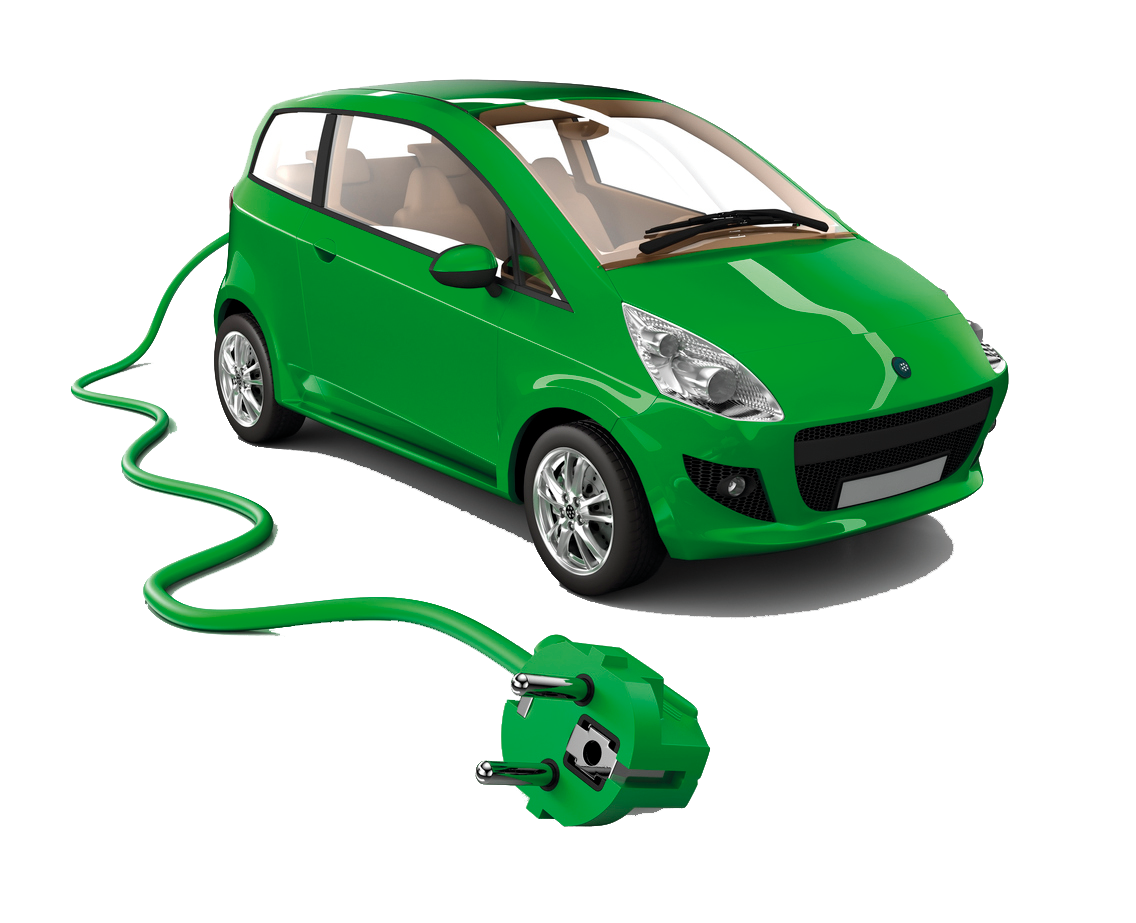
It wasn’t until a more advanced combustion engine and the expansion of highways that sales dropped off.
– Source: MCA
An increased demand in LNG from Asia could see Santos becoming the country’s largest independent energy producer. Santos currently exports more than three million tonnes of LNG per year from Australia and Papua New Guinea into Japan, China, South Korea, Malaysia and South East Asia. By 2025, Santos plans to increase its LNG sales by 50 per cent to more than four and a half million tonnes per year. The company’s recent $1.4 billion acquisition of ConocoPhillips’ northern Australia business is a major step in this direction.
“We’re a proud South Australian company that’s always had our headquarters here in Adelaide,” Hall says. “Our marketing, trading and commercial function – the part that does all the buying and selling of energy – is headquartered here in Adelaide, which is fantastic. We support the local economy through well-paying, high-skilled jobs, and not only that but very challenging roles as well. Lots of interesting jobs in LNG are becoming available locally, particularly as we start to become more sophisticated marketers and traders.”
Traditionally, Hall explains, Santos has recruited a lot of technical graduates but, as the company continues to evolve, there will be more opportunities for financial- and commercial-type roles as well. “We’ve got world-class, international jobs here in Adelaide,” Hall says. “I’ve worked all over the world – the Netherlands, UK, Canada, Spain, Thailand – and I’m able to have a job that rivals any of those jobs here in SA, which is phenomenal in terms of work-life balance.”
Santos is keen to welcome local South Australians with bright ideas, as new challenges continue to arise in the future. There’s not only carbon fuel emissions to combat, but economic challenges to consider as well. One billion people on earth don’t have access to electricity, and another billion only have access to unreliable electricity.
“How do we get the whole world out of energy poverty?” Hall asks. “At Santos we are continuing to look at how we can attain a better future for all people. There are a lot of challenges still to come in our industry, and we’ve got the opportunity to change that – and put South Australia on the world stage.”
Feeling the rush with gold
From ancient times, it has been the creator of civilisations, used to celebrate everything from births to marriages to deaths; and today, its value continues to grow
The glow of gold has captivated people since the dawn of time. Its rarity drives value. Its sheen inspires wonder. Its malleability enables excellent works of art. Put it all together, and little wonder some will go to extraordinary lengths to get it.
Striking gold may be a license to print money. Gold bullion may be a safe way to store that money. And stealing gold may be the stuff of legends. But, in skilled hands, the value of gold can be so much more than the metal itself. Take the death mask of Tutankhamun: today, its golden glow still breathes life to the face of the boy-king as it did 3000 years ago.
“As jewellers, our challenge is to add value to our pieces,” says Justin McCabe of Gerard McCabe jewellers in Adelaide Arcade. “It’s linking them to stories. It’s linking history to iconic designs. You want to make every piece unique in some way.”
Gold, he says, is the ultimate starting point. It has a sense of permanency. And it’s the job of a jeweller to value-add.
People want their gold with a little something extra. “When you walk past a jewellery store, you see a lot of sparkle. Gold is that glittery, lustrous, beautiful material we can easily craft. It’s very malleable. It’s something that lends itself to being designed.”
And that’s where artistry takes over. “It’s taking something from a raw form – a nugget – and then turning it into a finely crafted piece of jewellery,” he says. “That’s where the element of design and expertise comes in.”
Jewellery is often a mix of value, art, history and emotion. And gold is particularly powerful in the way it can capture and mix each of these elements. “That’s one of the things that makes our industry quite different,” McCabe says. “We’re always looking for new ideas. New influences. We’re always pushing for something better or unusual.”
For the McCabes, much of that inspiration comes from South Australia’s 1840s gold rush. In the 1990s, Gerard McCabe was asked by the SA Museum to value diamonds found in the Adelaide Hills Echunga gold mines. It was a “rush” of immense importance to the fledgling colony.
“It was the Olympic Dam of its day, equivalent to hundreds of millions of dollars in today’s money,” Justin McCabe says.
But the diamonds are a mystery. “No deposit has ever been found. They were just sporadically mixed through the Adelaide Hills in areas where you’d also find gold.”
The answer, he believes, is in South Australia’s geological age. They’d been scattered with gold across the landscape by billions of years of tectonic movements and erosion. And that’s an inspiring story.
“He (Gerard) came up with the idea of the Echunga collection, where no two diamonds are the same. It’s a way of us putting fancy colours into an Australian flavour of design, with a backstory that is South Australian”.
In recent decades, new deposits have been discovered in the Gawler Craton in the state’s midwest. Olympic Dam is one of the world’s most significant accumulations of metals, including copper, uranium, gold and silver. Meanwhile, Oz Minerals is operating a new copper and gold mine at Carrapateena north of Port Augusta.
There may be more to come: SA has attracted the eye of the world’s mineral industry and is now listed among the top 10 most attractive locations. BHP, for example, announced in late 2018 it had found another huge copper-gold deposit some 60km south of Olympic Dam.
And gold isn’t about to lose its shine any time soon. “I don’t think there will ever be a big downward price shift,” McCabe says. “It’s not like a sudden boom. It’s just been a steady and constant growth in value.”
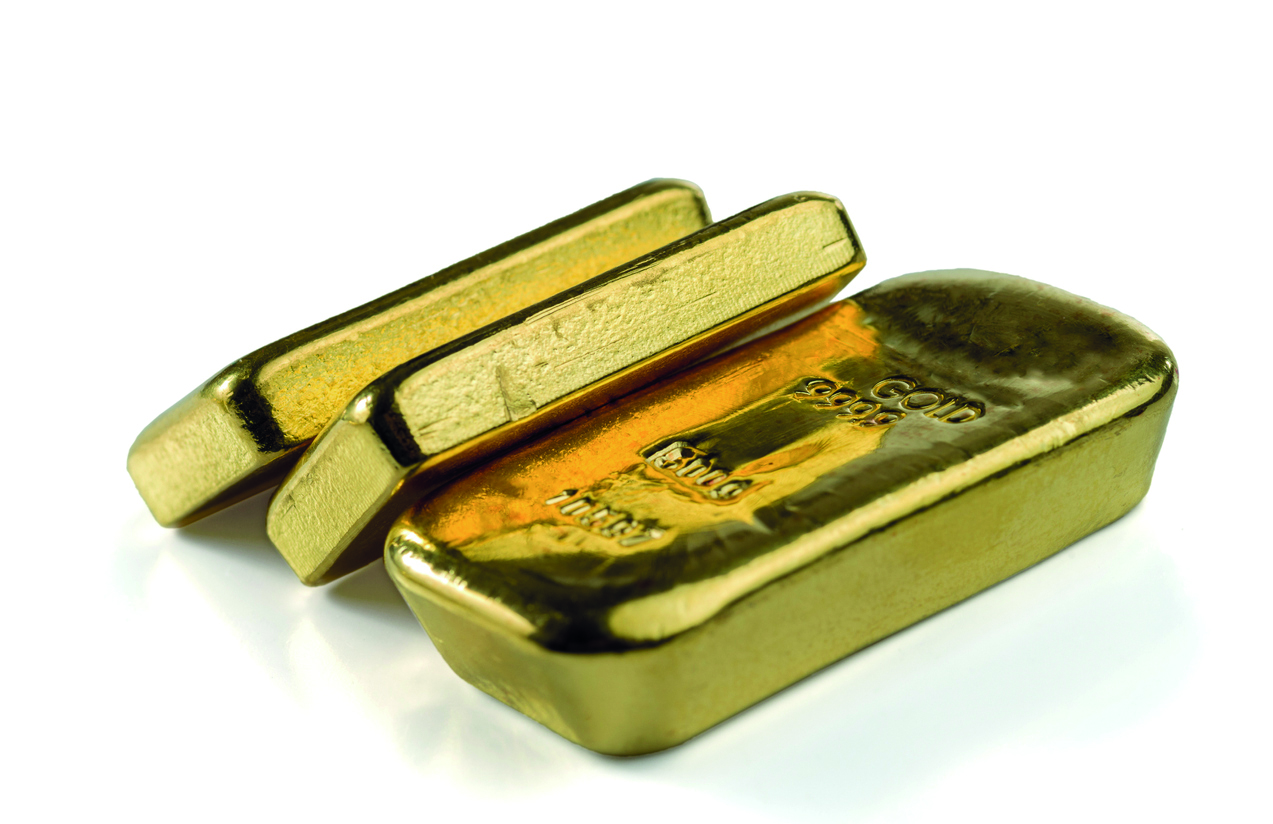
GOLD
It was once worshipped as the essence of the sun. Now its durability is protecting our spacecraft. Gold doesn’t corrode. It repels radiation. And it is extraordinarily pliable – capable of being pressed into incredibly thin sheets.
Such ultra-thin linings are what give combat jet cockpits and astronaut visors a golden sheen: it protects both from heat. Copper and silver are better conductors.
But gold outlasts both. It’s this endurance that puts it in solid-state computer memory and flash drives. Gold nanoparticles are even found in diagnostic tests for pregnancy, as well as for viruses such as malaria and HIV/AIDS.
 Modern gold mine
One ton of mobile phones yields more gold than one ton of gold ore.
Tech companies are cashing in on this gold mine by rolling out recycling programs.
– Source: MCA
Home coming
Emily Perry
Head of Corporate Affairs SA, BHP
Emily Perry spent almost 20 years working away from her home state – but she always knew she would return to South Australia one day.
After graduating with a Bachelor of Arts (Journalism) in 1997, Perry remained in Adelaide to work as a producer for ABC Radio and then as a media relations adviser for a local member of parliament. But when the offer came to move to Melbourne in 2000, Perry grabbed the opportunity to experience a new state and new career opportunities, working in the national media office for Telstra and then as communications manager for Holden.
But, even based in Victoria, Perry still held Adelaide close to her heart. “I was lucky enough to have a team in Adelaide with Holden’s vehicle manufacturing plant at Elizabeth, so I had lots of regular trips back and was able to maintain a connection to Adelaide,” she says.
For Perry, that connection was critical. “My husband and I are both from Adelaide,” she says. “We lived nearly 20 years in Melbourne, we had our two children there so all of my adult life and career was in Melbourne, but we always had that desire to one day come back to Adelaide to be close to our parents and to have the lifestyle we couldn’t have in Melbourne.”
Transitioning to a role with BHP in Melbourne gave Perry and her family the chance they had been waiting for. “My team from Melbourne worked closely with the team at Olympic Dam,” she says.
“After I had my second child, we were going through a restructure within corporate affairs so I made clear I was interested in moving back to Adelaide, but also looking to do a role that had more breadth. There was a lot of opportunity to raise the profile of Olympic Dam and make it more visible in the community, and I wanted to have the opportunity to work not just in communications but government relations, Aboriginal affairs and community relations.”
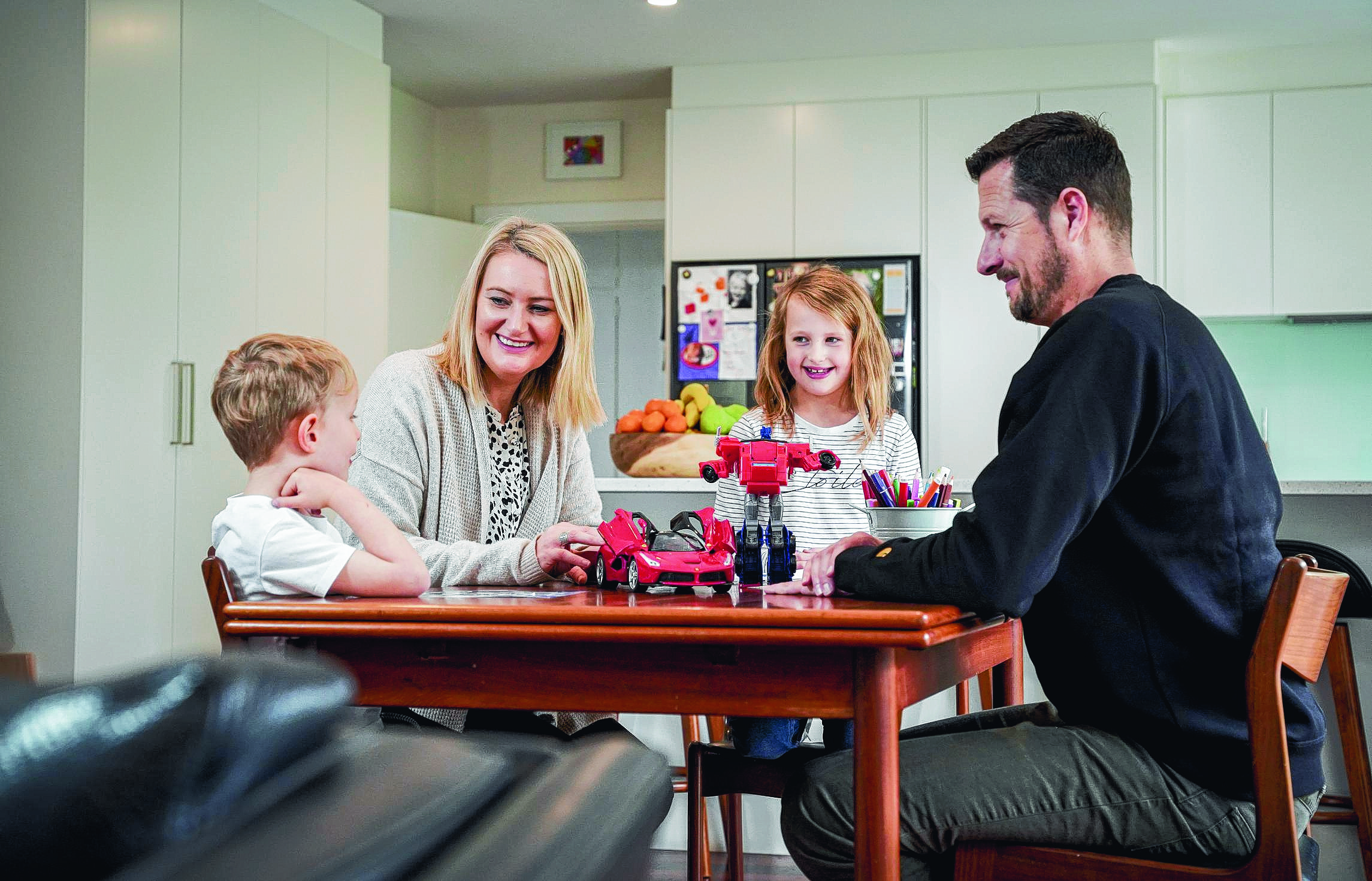
Perry and her family returned to South Australia in 2017 and haven’t looked back. “We have an amazing home we never could have afforded in Melbourne, a large block with plenty of room for the kids to run around,” Perry says. “I wanted to give the kids the kind of experiences I had growing up: you can walk on the beach, drive up the Hills and go to a winery, or walk up Mount Lofty.
“It’s not very often your life’s goals and your family goals line up with your career goals – that is the opportunity the resource industry presents in South Australia,” she says. “For me, personally, working at BHP, gives me the chance to have this amazing lifestyle and challenging, interesting, globally significant work.”